
The principle
An arena where nobody expects one
Arena polo needs very little: a flat rectangle of about 100 × 50 metres, a layer of sand, the boards, the lights. Around it you need space for the horses, the spectators and services. That is why an arena can spring up for a few days in a stadium, in a square, on a quayside or on a beach, and then disappear, leaving the place as it was.
It has already happened in Italy: in 2024 arena polo was played in Piazza Santa Croce in Florence, on the sand laid for the Calcio Storico (the historic Florentine football game); since 2021, in summer, on the Costa Smeralda, on a sports ground turned into an arena; in March 2026 on the beach at Forte dei Marmi; in May 2026 the Galoppatoio of Villa Borghese in Rome hosted the first edition of the European arena polo championship of the FIP, the Federation of International Polo.
Four places, four atmospheres
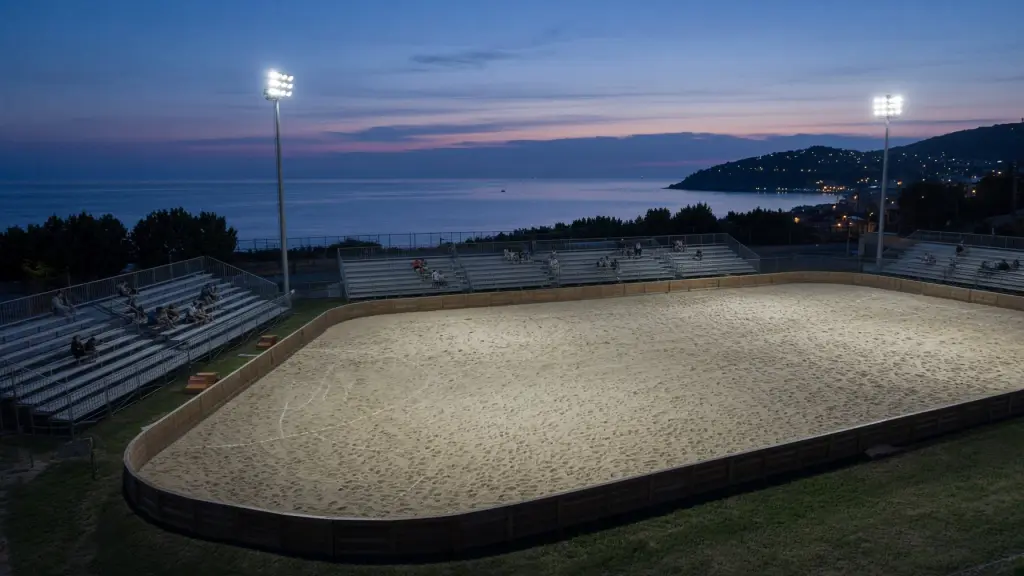
Stadiums and sports grounds
Fencing, stands, changing rooms, car parks and lights are already in place. Grass or artificial turf is protected with a ground sheet and a layer of sand.
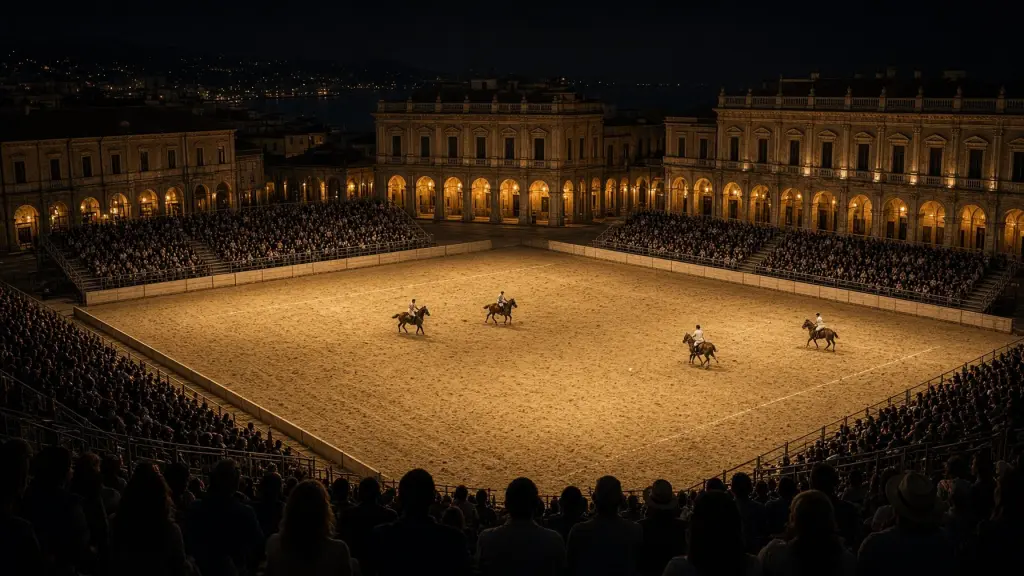
Historic squares
The most powerful atmosphere, in the heart of the city. It takes paving that must be protected, dialogue with the Soprintendenza (the Italian heritage authority) and precise logistics.
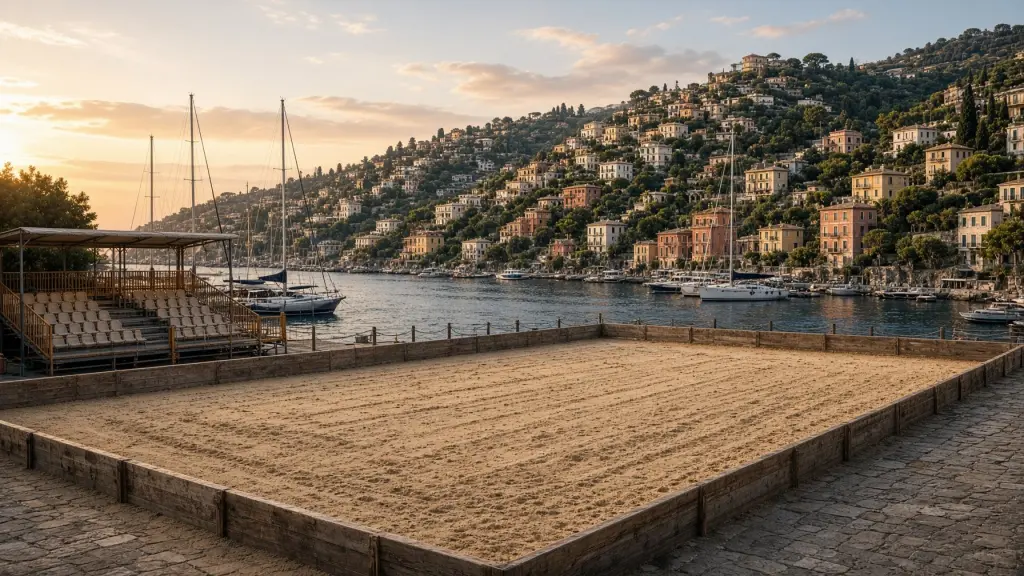
Harbours and quaysides
The sea a few metres away, boats in the background, easy access for vehicles. The decision lies with the Port System Authority or the Harbour Master’s Office (Capitaneria di porto).
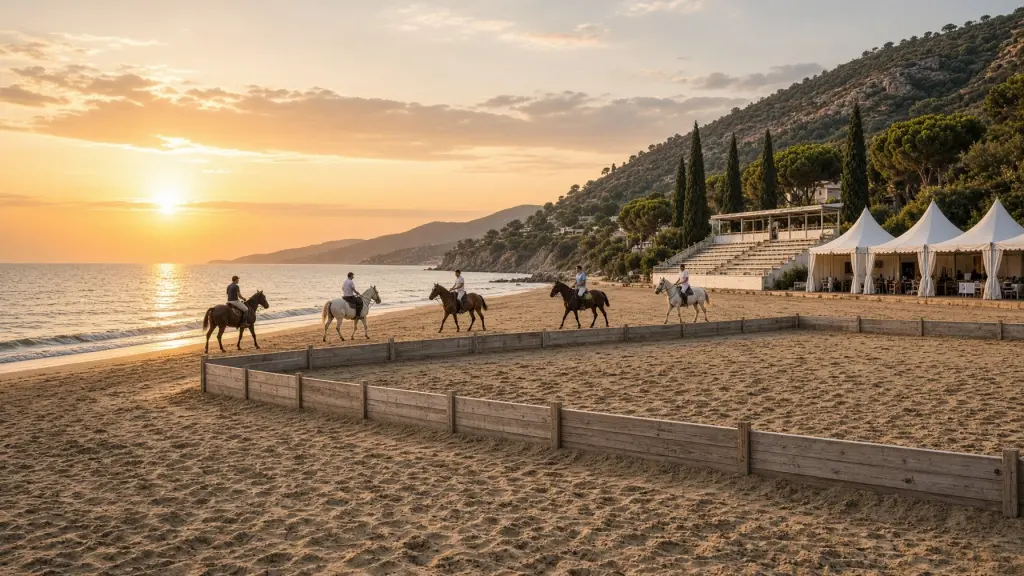
Beaches
The sand is already there. Play takes place outside the bathing season, in spring or autumn, with a permit for state-owned maritime land (demanio marittimo) and in compliance with local ordinances.
The areas we are studying
The Italian coast, from north to south
These are the coastal areas we are studying for the first events. They are working hypotheses: there is no agreement with municipalities, operators or clubs, and every location will need to be checked on site.
| Area | Why it interests us | What needs to be checked |
|---|---|---|
| Campania: Naples, Salerno, the Sorrento Peninsula and the Amalfi Coast | large urban spaces by the sea and an international audience; no previous polo found in the area | flat spaces large enough, load-bearing capacity of surfaces, horses arriving from outside the region |
| Lazio: the Roman coast | close to Rome, the club’s home city, and to the clubs where many polo horses are based | venue and permit for state maritime land |
| Tuscany: Versilia and Maremma | a tradition of polo and arena polo, an audience used to events | calendars already full, collaboration with local organisations |
| Sardinia: Costa Smeralda | well-established arena polo events in summer | availability of venues, horses travelling by ferry |
| Apulia | top-level hospitality and polo grounds near the coast | venue and logistics |
| Romagna: Rimini and the Riviera | very wide beaches, tourism out of season too | state maritime land, ordinances, horses from outside the region |
| Liguria, Sicily and the northern Adriatic | striking squares and seafronts | surfaces, loads, winds, logistics |
What it takes, in practice
The space
- A flat rectangle of about 100 × 50 metres, plus safety margins
- A stable area or horse lines in the shade, away from the public, with water
- Access for horse lorries and emergency vehicles
- Space for stands, hospitality, services and parking
The arena
- A sand surface of the depth specified by a surface specialist
- Sturdy boards all round and goals at each end
- Lighting for evening play
- A protective ground sheet over grass, artificial turf or stone
Permits and seasons
Municipality
Use of public land, a public entertainment licence and the opinion of the public entertainment safety commission on stands and temporary structures.
Horses
If the arena is not one of the authorised facilities, the rules for events involving equines apply (D.P.C.M. 8 January 2025), with vets, a doctor and an approval procedure that can take up to 90 days.
Sea
Beaches and quaysides require a permit for state-owned maritime land and the opinion of the competent authority; in summer, bathing ordinances apply.
Season and times
Spring and autumn for beaches; in summer, play takes place in the evening, under lights, when it is cool for the horses.
Do you have the right space?
Municipalities, port authorities, beach clubs, stadiums, hotels and organisers: tell us about your space. We will make an initial assessment and tell you clearly what is needed and how long it will take.