
In a nutshell
Polo, three-a-side, in a sand arena
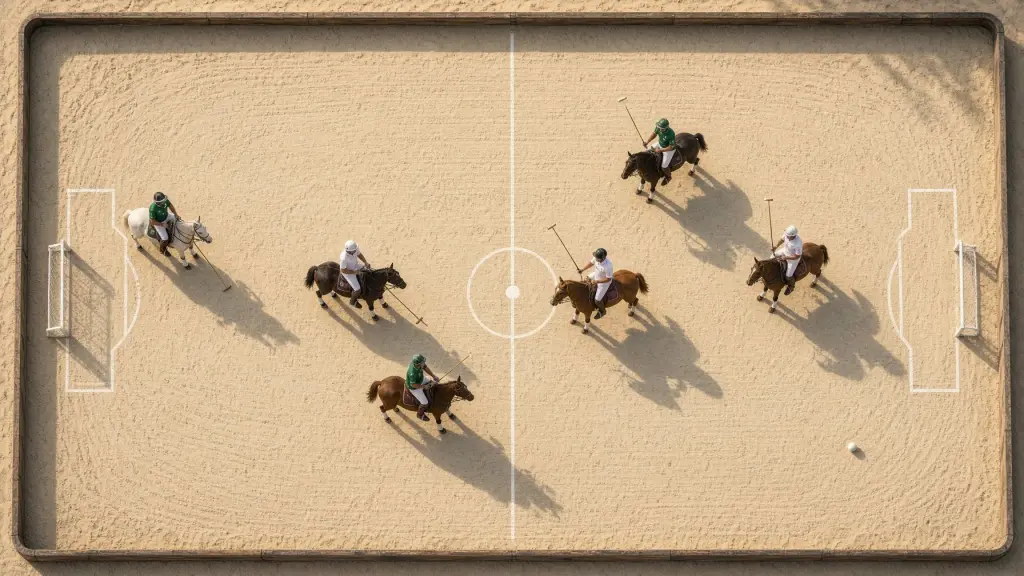
Arena polo is a form of polo played on a sand field enclosed by boards, much smaller than the traditional grass field. Teams have three players instead of four, the ball is larger and softer, and the boards keep it in play: the result is a fast, spectacular sport, right next to the crowd.
Precisely because the field is small, an arena can be set up in town, in a stadium or by the sea, and games can be played in the evening under lights.
The field
- Size: in Italy, arena polo is played on sand fields of about 100 × 50 metres or slightly less; traditional polo needs about 270 × 140 metres of grass.
- Boards: all around the field, sturdy and with no sharp edges; the ball bounces off them and stays in play.
- Goals: one at each end of the field; you score by sending the ball between the posts.
- Surface: sand that is prepared, levelled and watered, to protect the horses and keep the dust down.
The teams and the match
Three-a-side
Each team has three players, numbered 1 to 3: generally number 1 attacks, number 3 defends and number 2 links the two. In the arena, though, everyone attacks and everyone defends.
Chukkas
The match is divided into periods called chukkas, each lasting a few minutes; there are usually four. Between chukkas, players may change horses. Their number and length are set by the tournament rules.
The ball and the mallet
The arena ball is larger and softer than the one used in field polo. The mallet has a flexible shaft and a cigar-shaped wooden head: you strike with the long side of the head, not the tip.
Level (handicap)
Every player has a level, the handicap, assigned by the federation. In tournaments the combined handicap of a team is often capped, so that matches stay balanced.
Five rules for understanding a match
- The line of the ball. As the ball travels, it traces an imaginary line: the player following it has the right of way. Crossing this line in front of an opponent who has the right of way is the most important foul in polo.
- The ride-off. Two riders may come alongside each other, shoulder to shoulder, and push to move the opponent away from the ball, but only at a safe angle and at a similar speed.
- The hook. You may block an opponent’s mallet as they strike, with your own mallet and from the correct side, never over the opponent’s shoulder and never against the horse.
- The right hand. As a rule, the mallet is held in the right hand: it is a safety rule that makes movements on the field predictable.
- The penalty. A foul gives the opposing team a penalty shot from a distance that depends on how serious the foul is, and in the most serious cases it may count directly as a goal.
The official regulations prevail. This page explains the game in simple terms. In club activities and events, the regulations of FISE – Federazione Italiana Sport Equestri (the Italian Equestrian Sports Federation), Polo Department, and the arena polo rules of FIP – Federation of International Polo in force apply, together with the umpires’ decisions.
The horses
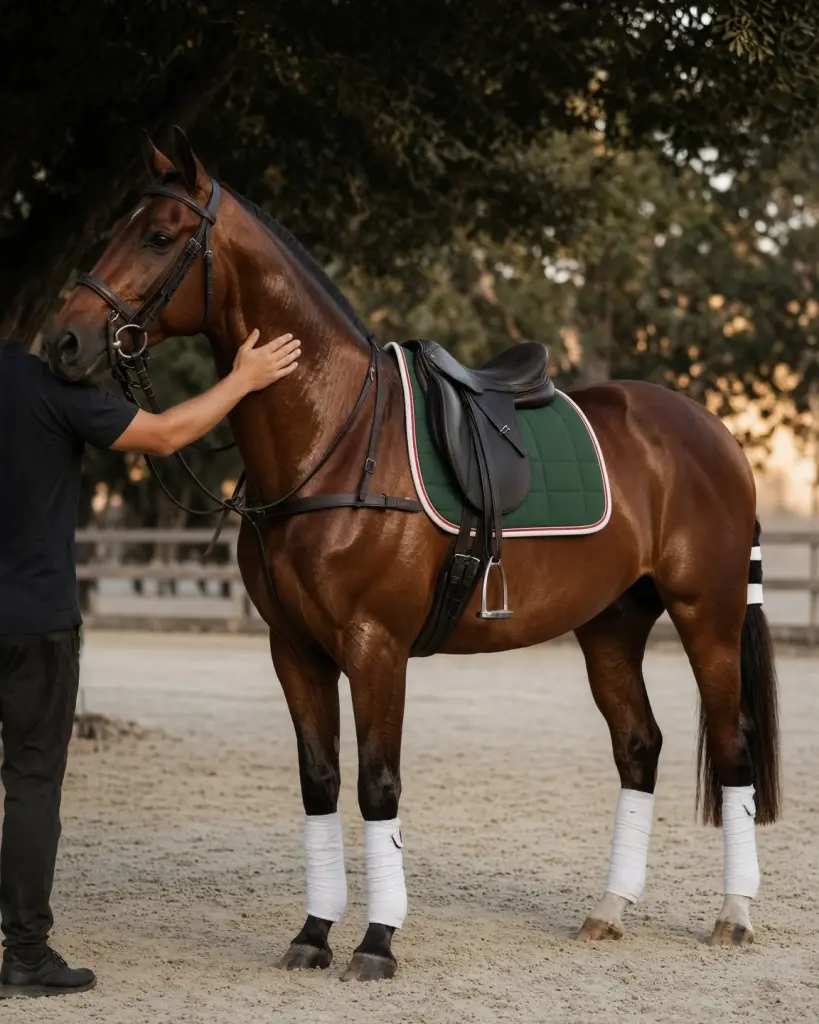
They are called polo ponies, but they are horses in every respect, chosen for agility, quick reactions and temperament. In the arena they must accelerate, stop and turn within a few metres, accept contact with other horses and stay calm amid the lights and the crowd.
Each player uses several horses during a match, so that each one works little and rests for a long time. Behind every horse is the work of the grooms, who prepare the horses, care for them and look after them before and after play.
Safety
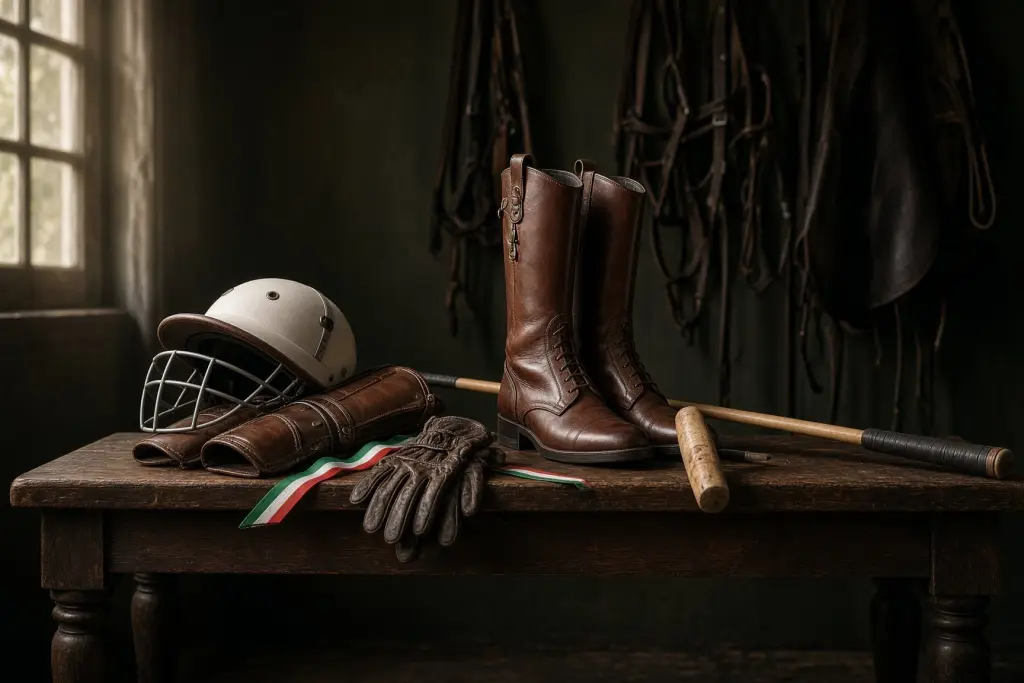
- Helmet with face guard or grille, boots and knee pads for all players; gloves and eye protection recommended.
- Bandages or boots on the horses’ legs, and checked tack.
- Umpires who stop play whenever a situation becomes dangerous.
- Boards, surface and lighting checked before every session.
- Spectators always outside the arena, behind barriers, and medical cover at events.
The language of polo
| Word | What it means |
|---|---|
| Chukka | One of the periods of a match |
| Line of the ball | The path of the ball, which determines who has the right of way |
| Ride-off | The shoulder-to-shoulder push between two riders |
| Hook | Blocking an opponent’s mallet as they strike |
| Handicap | A player’s level, assigned by the federation |
| Groom | The person who prepares and cares for the horses |
| Polo pony | The polo horse, whatever its height |
Frequently asked questions
Do I need to be able to ride already?
To play, yes: you need a solid grounding in riding. But you can start getting to know polo on the ground, on the wooden horse, and then follow the school programme with qualified instructors.
How old do you need to be?
Girls and boys can take up polo under FISE rules for young riders, with their parents’ consent. Adults can start at any age, provided they are in good health and have the required medical certificate.
Can I watch a match?
Yes: many arena polo events are open to the public. For each club event, we give access arrangements, times and rules for spectators on the Events page.
How much does it cost to play?
It depends on horses, instructors and facilities. Club and activity fees are set by the ENSI Board and will be published on the Become a member page.