
Our charter
The horse comes first
Without horses there is no polo. That is why horse welfare is not a separate chapter: it is the yardstick by which we choose venues, timings, event formats and the people we work with.
The Horse Welfare Charter is part of the Membership and Participation Rules and applies to members, participants, clubs and organisers who work with us. It draws on animal protection legislation, the veterinary regulations of FISE – Federazione Italiana Sport Equestri (the Italian Equestrian Sports Federation) and the welfare principles of the FEI (the International Equestrian Federation) and the FIP (Federation of International Polo).
Before the arena
- Identified horses, with passport and microchip, up to date with the vaccinations, checks and health tests required by law and by FISE.
- Suitable horses: healthy, fit and with the right temperament for the arena, in terms of age and training.
- Planned journeys, with rest stops, suitable vehicles and trained staff; arrival with enough time to settle in.
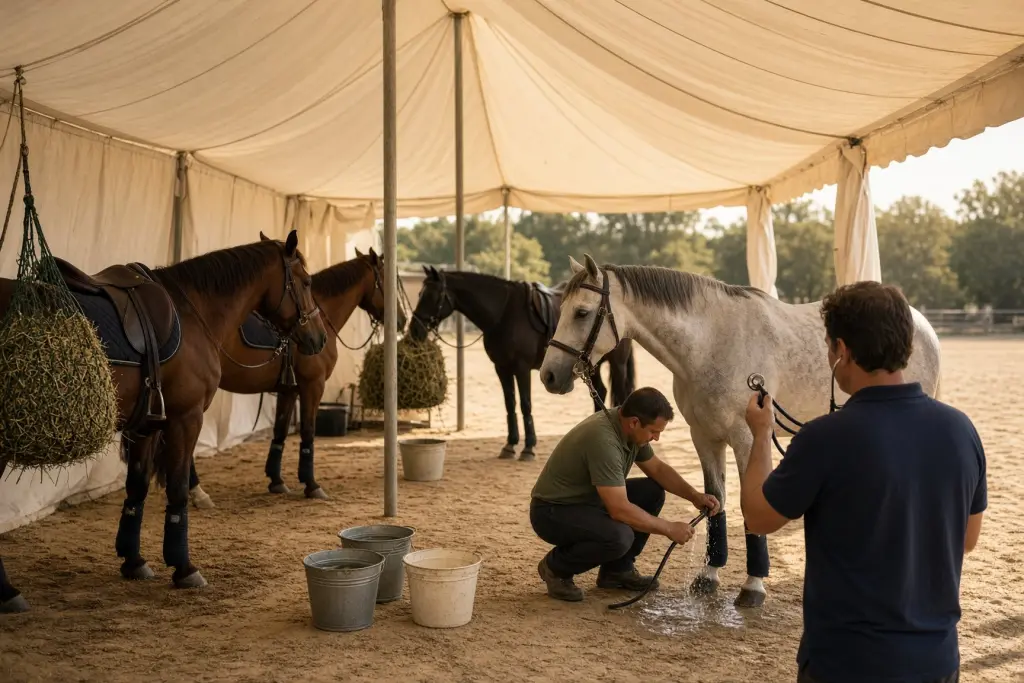
- Stables or horse lines in the shade, fresh water always available, space to rest away from the public.
During play
The vet decides
An examination before the event, and a vet on site or on call during play. The vet can stop a horse at any time, and that decision is final.
Few chukkas, plenty of rest
The number of chukkas each horse plays and its rest periods follow the rules of play and the vet’s instructions. Every player uses several horses.
Beating the heat
When temperature and humidity are high, play moves to the evening, and matches are shortened or suspended. In summer, arena polo comes alive under the lights.
The surface
Sand prepared, levelled and watered before every session, to protect tendons and joints and to avoid dust.
Whip and spurs
Only in the ways permitted by the rules. Any excessive use is prohibited and penalised.
Injuries
An injured horse receives immediate care, in a reserved area away from the public.
After their career
A polo horse deserves a dignified retirement. The club promotes awareness initiatives and, when possible, works with those who rehome horses that stop playing.
Have you seen something wrong?
Anyone can report improper treatment of a horse to the Horse Welfare Officer by writing to ENSI Social APS via the Contact page. Reports are handled in confidence.